


- Bestsellers
- Alcoholism
- Allergy
- Alzheimers
- Anti Fungal
- Anti Viral
- Anti-Depressants
- Anti-Inflammatory
- Antibacterial
- Antibiotics
- Antiparasitic
- Arthritis
- Asthma
- Birth Control
- Blood Pressure
- COVID-19
- Cancer
- Cardiovascular
- Cholesterol
- Diabetes
- Diuretics
- Erectile Dysfunction
- Eye Drop
- Gastro Health
- General Health
- HIV
- Hair Loss
- Hepatitis C Virus (HCV)
- Herbals
- Hormones
- Men's ED Packs
- Men's Health
- Mental Illness
- Motion Sickness
- Muscle Relaxant
- Pain Relief
- Parkinson’s Disease
- Quit Smoking
- Skin Care
- Sleeping Aids
- Veterinary Medicines
- Vitamins
- Weight Loss
- Women's Health
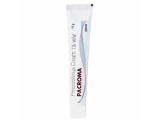
Generic Elidel ( Pimecrolimus )

Elidel
| Active ingredient | pimecrolimus 1 % |
|---|---|
| Mechanism of action | Inhibits calcineurin, reducing inflammatory cytokines |
| Common dose | 0.1 % cream applied twice daily |
| What is it used for? | Atopic dermatitis (eczema) |
| Important information on taking | Apply a thin layer to affected skin, avoid contact with eyes |
| Common side effects | Burning, itching, pain at application site |
| Serious risks | Potential risk of skin cancer or lymphoma with long-term use |
| Interactions | May interact with strong CYP3A4 inhibitors or inducers; avoid concurrent strong topical steroids without medical advice |
| Contraindications | Not for children under 2 years, not for immunocompromised patients, not for psoriasis |
| Legal status | Prescription medication in many countries |
A closer look at Elidel and how it works
Definition and mechanism of action of Elidel
Elidel is a topical immunosuppressive medication used to treat mild to moderate atopic dermatitis. It belongs to the class of calcineurin inhibitors that modulate immune cell activation. The active ingredient pimecrolimus works by binding to fkbp12 and inhibiting calcineurin. Inhibition of calcineurin reduces the production of cytokines such as interleukin-2. The decrease in cytokine release dampens the inflammatory response on the skin. Elidel is applied as a thin layer to affected areas twice daily for up to six weeks. By selectively suppressing t-cell mediated inflammation it helps relieve itching and redness. The drug does not cause significant systemic absorption when used as directed.
Understanding the pharmacological properties of Elidel
Elidel is a topical immunosuppressant used to treat inflammatory skin conditions. Its active component pimecrolimus blocks calcineurin, an enzyme that initiates immune signaling in skin cells. This inhibition reduces the release of inflammatory cytokines such as interleukin-2 and interferon-gamma. The decrease in cytokine activity alleviates redness itching and swelling associated with atopic dermatitis. Elidel is applied directly to affected areas to provide symptomatic relief without corticosteroid use. It is indicated for short-term management of mild to moderate eczema in patients who cannot use or prefer to avoid steroids. The drug's mechanism relies on selective suppression of t-cell activation to restore skin barrier function.
Medical indications for Elidel
| Atopic dermatitis | 0.1 % topical cream, apply twice daily for up to 6 weeks |
|---|---|
| Contact dermatitis | 0.1 % topical cream, apply three times daily for 2-4 weeks |
| Mild-to-moderate eczema | 0.1 % topical ointment, apply twice daily for 4-6 weeks |
Common side effects of Elidel
Side effects of Elidel
Patients may notice a temporary sensation of warmth or burning when applying Elidel. A mild itching or tingling feeling can occur in some individuals. Redness or irritation of the skin may develop at the treated area. A short-lived increase in dryness or flakiness of the skin can be observed. Occasional episodes of headache or mild flu-like symptoms have been recorded. Changes in skin pigmentation may appear in rare cases. These effects are generally mild and tend to resolve without intervention.
What should I note before taking Elidel?
Elidel may cause mild skin irritation at the application site. Some users report a burning or stinging sensation during treatment. Headaches have been reported in a small number of patients. Rarely, the medication can lead to flu-like symptoms such as fever or fatigue. Changes in skin color or texture have been observed in isolated cases. The drug may increase photosensitivity to sunlight in certain individuals. Long-term safety data are still being evaluated by researchers.
Typical reactions to Elidel
- Burning or stinging sensation at the application site
- Itching
- Redness (erythema)
- Dry skin (xerosis)
- Headache
Elidel (pimecrolimus) is a non-steroidal topical treatment that can effectively control mild-to-moderate eczema when other therapies have failed or are inappropriate. It works by modulating the immune response, reducing inflammation without the skin-thinning risks associated with prolonged corticosteroid use. However, because it can increase photosensitivity, patients should apply broad-spectrum sunscreen and limit sun exposure while using the medication. Regular follow-up with a dermatologist is essential to monitor for signs of infection or unwanted skin reactions and to reassess the need for continued therapy. Users should start with a thin layer applied twice nightly, gradually tapering once symptoms improve, rather than using it indefinitely. It is also important to avoid applying Elidel to broken skin, open wounds, or areas with active infections. Finally, pregnant or nursing individuals should discuss potential risks with their healthcare provider before beginning treatment.
 Adeel Saqib, M.D.
: ABEM Certified, Emergency Medicine

 David P. Bryant, D.O.
: ABEM Certified, Emergency Medicine
 Chad Jeffrey Jensen, M.D.
: ABEM Certified, Emergency Medicine
 Adeel Saqib, M.D.
: ABEM Certified, Emergency Medicine
 Barbara Van De Water
: ABEM Certified, Emergency Medicine
 Amy R McManus, M.D.
: ABEM Certified, Emergency Medicine
 David L. Francis, M.D.
: ABEM Certified, Addiction, DEA, Emergency Medicine, MyEMCert, opioids, Substance Use Disorder
 Luke
: ABEM Certified, Emergency Medicine
 Royale Nichols, M.D.
: ABEM Certified, Emergency Medicine
 Marco Antonio Escobedo, M.D.
: ABEM Certified, Emergency Medicine
 Matthew Robert Lohse, M.D.
: ABEM Certified, Advanced Emergency Medicine Ultrasonography, Emergency Medicine, Focused Practice Designation, Ultrasonography, Ultrasound


| Shipping method | Delivery time | Price | |
| Airmail service Delivery | 14-21 days | 14.95$ | Tracking# available in 4 days |
| Trackable service Delivery | 9-14 days | 30$ | Tracking# available in 2 days |
- Shipping worldwide
- Confidentiality and anonymity guarantee
- Safe and secure
- Discrete looking packages
- Dispatch orders within 24 hours
- 100% success delivery